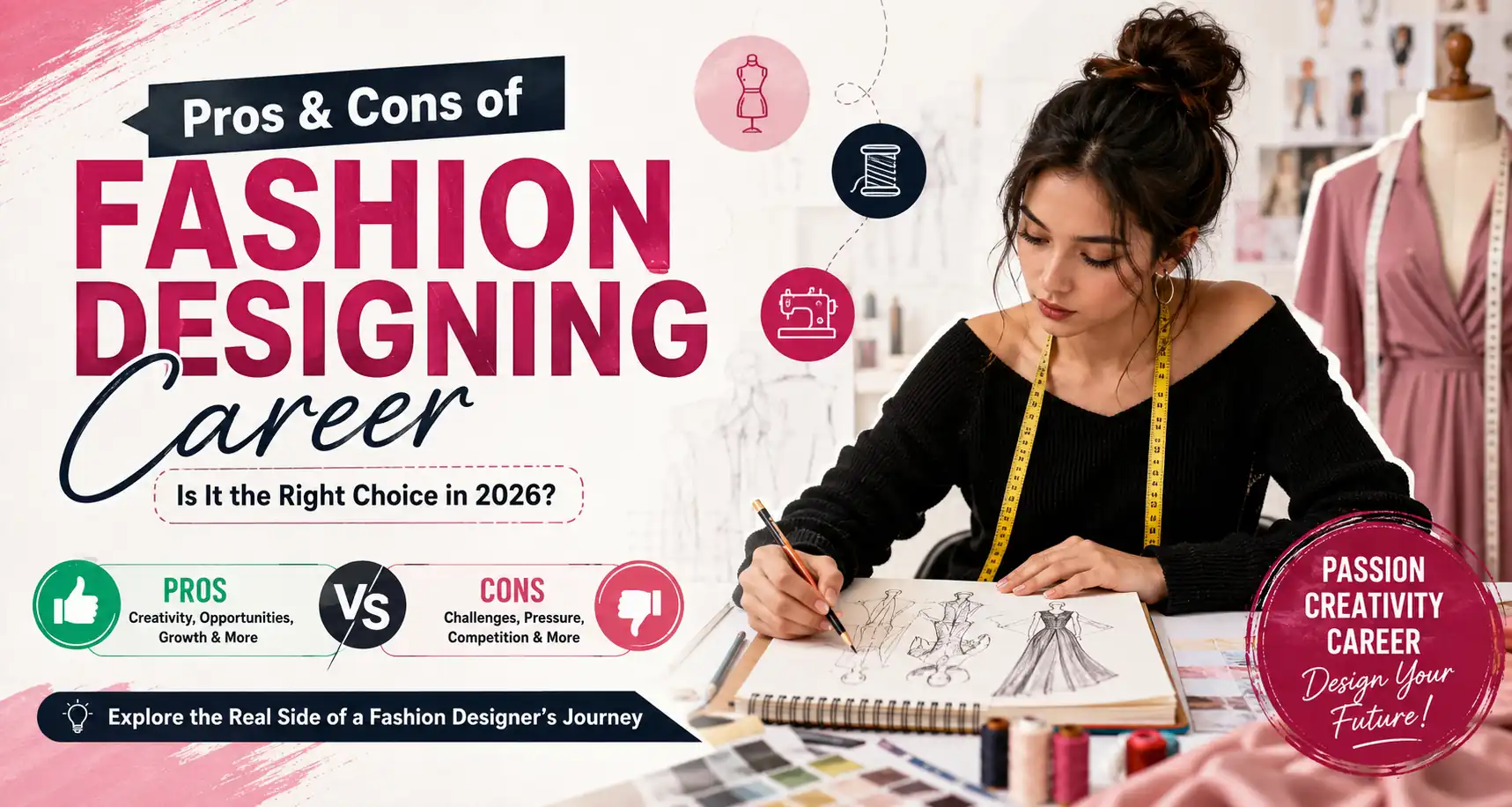
Pros and Cons of Fashion Designing Career: Is It the Right Choice in 2026?
Fashion designing is no longer just about creating beautiful clothes. Today, it is one of the fastest-growing creative careers in India. From luxury fashion brands and designer labels to e-commerce platforms and sustainable fashion startups, the industry offers exciting opportunities for talented individuals. As people’s interest in fashion continues to grow, the demand for skilled fashion designers is also increasing.
Many students who have completed Class 10 or 12 often ask, “Is fashion designing a good career?” or “Should I choose fashion designing as my profession?” The answer depends on your interests, creativity, dedication, and willingness to learn. Like every profession, fashion designing has both advantages and challenges. Understanding both sides will help you make the right career decision.
The fashion industry has changed a lot over the last few years. Digital fashion, AI-powered design tools, sustainable clothing, and online shopping have created new career opportunities for aspiring designers. Companies are looking for professionals who not only understand design but also know how to use technology, understand customer preferences, and create market-ready collections.
Choosing a career without proper research can lead to disappointment later. That is why this guide explains the pros and cons of a fashion designing career in simple language. Whether you dream of becoming a fashion designer, launching your own clothing brand, working with celebrities, or joining a leading fashion house, this article will help you understand what to expect.
At INIFT, we have guided thousands of students towards successful careers in fashion and design. Through industry-focused training, practical learning, and portfolio development, students gain the confidence and skills needed to build a strong future in the fashion industry.
In this guide, you will learn:
- What a fashion designing career really involves.
- Whether fashion designing is a good career in 2026.
- The biggest advantages of becoming a fashion designer.
- Real career opportunities available after completing a fashion designing course.
- Important factors to consider before choosing this profession.
Let’s begin by understanding what fashion designing actually means.
What Is a Fashion Designing Career?
Fashion designing is the art of creating clothing, accessories, and fashion products that combine creativity, functionality, and style. A fashion designer transforms ideas into wearable designs by studying fabrics, colours, patterns, market trends, and customer preferences.
However, fashion designing is much more than sketching clothes. A professional designer researches current fashion trends, understands customer needs, creates design concepts, selects suitable materials, develops patterns, and works closely with production teams to bring designs to life.
Today’s fashion designers also use modern software to create digital sketches, 3D garment designs, and virtual fashion collections. As technology becomes more important in the industry, designers need both creative and technical skills to stay competitive.
A fashion designing career offers opportunities across many industries. Designers are not limited to clothing brands. They can work in retail companies, export houses, textile firms, costume design, luxury fashion brands, e-commerce businesses, fashion magazines, and even film and television productions.
Some professionals also choose entrepreneurship by launching their own clothing labels, boutique stores, or designer brands. Others become freelance designers and work with clients from different parts of the world.
A fashion designer’s daily responsibilities may include:
- Researching the latest fashion trends.
- Sketching new garment ideas.
- Selecting fabrics, colours, and materials.
- Creating technical drawings and digital designs.
- Coordinating with pattern makers and production teams.
- Meeting clients and understanding their design requirements.
- Presenting fashion collections during exhibitions or fashion shows.
The profession is ideal for individuals who enjoy creativity, problem-solving, innovation, and continuous learning. Every new project gives designers an opportunity to create something unique that reflects changing fashion trends and consumer preferences.
Is Fashion Designing a Good Career in 2026?
Yes, fashion designing continues to be one of the most promising creative career options in 2026. The Indian fashion industry is growing rapidly due to increasing consumer spending, online shopping, global fashion influence, and rising demand for personalized clothing. Brands are constantly looking for talented designers who can create fresh ideas and adapt to changing market trends.
The fashion industry today is much broader than traditional clothing design. Designers now contribute to sportswear, luxury fashion, sustainable clothing, digital fashion, fashion technology, and online retail. This expansion has created more career paths than ever before.
Another reason fashion designing remains a strong career choice is the growth of India’s fashion startup ecosystem. Many young designers are launching their own labels through online platforms without investing in large physical stores. Social media has also made it easier for talented designers to showcase their work and build their personal brands.
At the same time, international fashion brands continue expanding their presence in India, increasing the demand for skilled professionals who understand both global trends and local markets.
However, success in fashion designing does not happen overnight. It requires creativity, patience, practical skills, and continuous improvement. Students who are passionate about fashion and willing to work hard often find this profession highly rewarding.
Some reasons why fashion designing remains a good career choice include:
- Growing demand for skilled fashion professionals.
- Opportunities in both India and international markets.
- Creative work environment.
- Possibility of starting your own fashion business.
- Increasing demand for sustainable and ethical fashion.
- Career growth in e-commerce and digital fashion.
Students who receive practical training from experienced mentors often have better career opportunities because employers prefer candidates who can work confidently on real projects. This is why choosing the right fashion designing institute plays an important role in building a successful career.
At INIFT, students gain practical exposure through live projects, portfolio development, industry workshops, and expert guidance that helps them prepare for today’s competitive fashion industry.
Pros of Choosing Fashion Designing as a Career
Every career offers unique benefits, and fashion designing is no different. If you have creativity, dedication, and a passion for design, this profession can provide excellent personal and professional growth. Let’s explore some of the biggest advantages of choosing fashion designing as a career.
1. A Career That Lets You Express Your Creativity
One of the biggest reasons students choose fashion designing is the opportunity to express their creativity every day. Unlike many traditional careers that follow fixed routines, fashion designing encourages original thinking and innovation.
Every collection starts with an idea. Designers experiment with colours, fabrics, silhouettes, prints, and textures to create something new that reflects modern trends while meeting customer expectations.
Whether you enjoy sketching, styling outfits, or creating unique fashion concepts, this profession gives you the freedom to transform your imagination into reality.
Creative satisfaction is one of the strongest rewards of becoming a fashion designer because your ideas become products that people wear with confidence.
2. Excellent Career Growth Opportunities
The fashion industry offers multiple career paths instead of limiting professionals to a single role. As you gain experience and improve your skills, you can move into higher positions or specialize in different areas of fashion.
Career growth becomes even faster when designers continuously upgrade their knowledge and stay updated with changing market trends.
Some popular career options include:
- Fashion Designer
- Apparel Designer
- Fashion Stylist
- Costume Designer
- Textile Designer
- Fashion Illustrator
- Fashion Consultant
- Fashion Merchandiser
- Fashion Buyer
- Visual Merchandiser
Many professionals also become creative directors, brand consultants, entrepreneurs, or fashion educators after gaining industry experience.
3. Opportunity to Start Your Own Fashion Brand
Many fashion designers dream of becoming entrepreneurs. One of the biggest advantages of learning fashion designing is that it opens the door to starting your own clothing label or designer boutique.
With the growth of e-commerce platforms and social media marketing, launching a fashion brand has become more accessible than ever before. Instead of depending only on traditional retail stores, designers can sell directly to customers through websites, marketplaces, and social media platforms.
Starting your own brand also allows you to:
- Build your personal identity.
- Create unique collections.
- Set your own business goals.
- Reach customers across India and internationally.
- Grow your business at your own pace.
Many successful designers started with small collections before building well-known fashion brands. With the right skills, business knowledge, and dedication, fashion designing can become both a creative and entrepreneurial career.
4. Attractive Income Potential
Fashion designing offers strong earning potential as your experience and reputation grow. While fresh graduates usually begin with entry-level salaries, professionals who consistently improve their skills often see significant income growth over time.
Designers can also increase their earnings by exploring multiple income sources, such as freelancing, custom designing, styling, consulting, online businesses, or launching their own fashion labels.
The more value you create through creativity, quality, and customer satisfaction, the greater your long-term earning potential becomes.
5. Opportunities to Work with Exciting Industries
Fashion designing is connected to many industries beyond clothing. This means you are not limited to one type of job throughout your career.
Fashion professionals can work in:
- Fashion brands
- Retail companies
- Textile industries
- Film and television
- Wedding and bridal wear
- Export houses
- Luxury fashion labels
- E-commerce companies
- Fashion magazines
- Event and styling agencies
This variety makes the profession exciting because every project brings new learning experiences and creative challenges.
Cons of Choosing Fashion Designing as a Career
While fashion designing offers exciting opportunities, it is equally important to understand its challenges. Every profession has advantages and disadvantages, and knowing them helps you prepare for a successful career. If you are passionate about fashion, these challenges can be managed with the right skills, practical experience, and a positive attitude.
1. The Fashion Industry Is Highly Competitive
Fashion designing is one of the most creative industries, but it is also highly competitive. Every year, thousands of students complete fashion designing courses and enter the job market. To stand out, you need strong technical skills, creativity, and an impressive portfolio.
Simply earning a certificate is not enough. Employers and clients want to see your original designs, practical projects, and ability to solve real design problems.
The good news is that students who continuously improve their skills and build a professional portfolio often find better career opportunities.
2. Long Working Hours During Busy Seasons
Unlike regular office jobs, fashion designers may have to work extra hours during fashion shows, product launches, festive collections, or client deadlines.
Sometimes a designer may need to revise designs multiple times before final approval. During busy periods, teamwork and time management become extremely important.
Although the workload can be challenging, many designers find it rewarding because they enjoy seeing their ideas become finished products.
3. Income May Be Limited at the Beginning
Many students believe that every fashion designer earns a high salary immediately after graduation. In reality, most professionals begin with entry-level positions where they focus on learning industry processes and gaining practical experience.
As your skills improve and your portfolio becomes stronger, your income usually increases significantly.
Some factors that affect salary include:
- Skills and creativity
- Educational background
- Practical experience
- Location
- Company reputation
- Portfolio quality
- Communication skills
Designers who develop specialized skills and build a strong professional network often achieve faster career growth.
4. Continuous Learning Is Essential
Fashion trends change every season. Colours, fabrics, styles, customer preferences, and technology continue to evolve throughout the year.
A successful fashion designer never stops learning.
You should regularly update your knowledge about:
- Global fashion trends
- Sustainable fashion
- Digital fashion
- AI-powered design tools
- New fabrics
- Fashion software
- Consumer behaviour
Students who enjoy learning new things usually perform better in this industry.
5. Managing Different Client Expectations
Every client has different ideas, budgets, and preferences. Sometimes a designer must balance creativity with practical requirements.
You may receive feedback asking you to modify designs several times before the final approval. Learning how to communicate professionally and understand customer needs becomes an important part of your career.
Strong communication skills often make as much difference as creative ability.
6. Building a Professional Reputation Takes Time
Success in fashion designing does not happen overnight.
Many successful designers spent years developing their skills, building portfolios, participating in fashion events, and creating industry connections before becoming well-known.
Patience, consistency, and continuous improvement are key to long-term success.
7. Technology Is Changing the Industry
Modern fashion companies expect designers to understand both traditional design techniques and digital tools.
Today’s designers often work with:
- Adobe Illustrator
- Adobe Photoshop
- CLO 3D
- CAD software
- Digital pattern-making tools
Students who are comfortable with technology have an advantage in today’s fashion industry.
Fashion Designer Salary in India (2026)
One of the most common questions students ask is, “How much does a fashion designer earn in India?”
There is no fixed salary because income depends on several factors, including experience, location, employer, specialization, and skill level.
Generally, designers earn more as they gain practical experience and build a strong portfolio.
Average Salary of Fashion Designers in India
| Experience | Estimated Annual Salary |
| Fresher | ₹2.5–4 LPA |
| 2–5 Years | ₹5–8 LPA |
| 5–10 Years | ₹8–15 LPA |
| Senior Designer | ₹15–25 LPA or more |
| Fashion Brand Owner | Income depends on business growth |
Apart from regular jobs, many designers earn additional income through:
- Freelance projects
- Bridal wear design
- Celebrity styling
- Online clothing businesses
- Fashion consulting
- Personal designer services
Your earning potential grows as your reputation and client base increase.
Skills Required to Become a Successful Fashion Designer
Fashion designing is a combination of creativity, technical knowledge, and business understanding.
Students should focus on developing both technical and soft skills.
Technical Skills
A fashion designer should learn:
- Fashion illustration
- Pattern making
- Draping
- Garment construction
- Fabric knowledge
- Colour theory
- Textile science
- Fashion CAD
- Adobe Illustrator
- Adobe Photoshop
- CLO 3D
- Portfolio development
These technical skills help designers create professional-quality work suitable for the industry.
Soft Skills
Success also depends on personal qualities such as:
- Creativity
- Observation skills
- Problem-solving
- Communication
- Teamwork
- Time management
- Confidence
- Adaptability
- Attention to detail
These skills help designers work effectively with clients, production teams, and fashion brands.
At INIFT, students develop both technical knowledge and professional skills through practical assignments, workshops, and industry-based learning.
How to Become a Fashion Designer in India
Many students feel confused about where to begin. Fortunately, becoming a fashion designer follows a clear path when you choose the right education and practical training.
Step 1: Complete Your School Education
Students can choose fashion designing after completing Class 10 or Class 12, depending on the course they wish to pursue.
Several institutes offer diploma, undergraduate, and advanced programs suitable for different educational backgrounds.
Step 2: Choose the Right Fashion Designing Course
Selecting a recognized institute is one of the most important decisions.
A good course should provide:
- Practical training
- Industry exposure
- Software training
- Portfolio development
- Live projects
- Internship opportunities
- Placement support
Learning through practical experience prepares students for real industry challenges.
Step 3: Build Strong Design Skills
During your course, focus on improving your creative and technical abilities.
Practice regularly by creating:
- Fashion sketches
- Mood boards
- Design collections
- Garment samples
- Digital illustrations
The more you practice, the stronger your portfolio becomes.
Step 4: Complete an Internship
Internships provide valuable industry experience.
Students learn:
- Production processes
- Client communication
- Fashion merchandising
- Quality control
- Team coordination
Practical exposure increases confidence before entering full-time employment.
Step 5: Create an Impressive Portfolio
Your portfolio is often more important than your resume.
It should showcase:
- Original sketches
- Collection concepts
- Technical drawings
- Fabric research
- Finished garments
- Creative projects
A professional portfolio helps employers understand your design abilities.
Step 6: Start Your Career
After completing your course, you can:
- Apply for fashion companies.
- Join export houses.
- Work with designers.
- Become a stylist.
- Start freelancing.
- Launch your own fashion label.
Many graduates continue upgrading their skills throughout their careers to stay competitive.
Best Career Opportunities After Fashion Designing
Fashion designing opens doors to many exciting professions.
Some of the most popular career options include:
- Fashion Designer
- Apparel Designer
- Textile Designer
- Costume Designer
- Fashion Stylist
- Fashion Consultant
- Fashion Illustrator
- Fashion Merchandiser
- Fashion Buyer
- Visual Merchandiser
- Fashion Entrepreneur
- Fashion Blogger
- Fashion Influencer
- Fashion Educator
- Product Developer
Each career offers different responsibilities, work environments, and growth opportunities.
Students can choose a specialization based on their interests, strengths, and long-term career goals.
At INIFT, students receive career guidance to help them identify the specialization that best matches their skills and aspirations.
Who Should Choose Fashion Designing as a Career?
Fashion designing is an excellent career choice, but it is not the right fit for everyone. Before enrolling in a fashion designing course, it is important to understand whether your interests and personality match the profession.
If you enjoy expressing your ideas through design, love experimenting with new styles, and are excited about learning something new every day, fashion designing can be a rewarding career. Success in this field comes from passion, creativity, patience, and continuous improvement rather than talent alone.
You may enjoy a career in fashion designing if you:
- Love fashion, clothing, and styling.
- Enjoy drawing or visualizing creative ideas.
- Like working on unique projects.
- Are willing to learn new skills and software.
- Can adapt to changing fashion trends.
- Dream of launching your own fashion brand.
- Enjoy solving creative challenges.
- Are comfortable working with people and clients.
Even if you are not naturally good at sketching, you can still become a successful fashion designer. Professional training helps students improve their drawing, garment construction, digital design, and technical skills over time.
At INIFT, students from different educational backgrounds learn through practical assignments and industry-based projects that help build confidence and creativity.
Who May Want to Explore Other Career Options?
Fashion designing is exciting, but it also demands dedication and flexibility. If you prefer a routine job with fixed responsibilities and are not interested in creative work, another career path may suit you better.
This career may not be ideal for individuals who:
- Do not enjoy creative work.
- Prefer repetitive daily tasks.
- Find it difficult to work under deadlines.
- Are unwilling to keep learning new trends.
- Do not enjoy working with clients or teams.
Understanding your interests before choosing a course can help you make a confident career decision.
Tips to Build a Successful Fashion Designing Career
Building a successful career in fashion designing requires much more than completing a course. The industry rewards professionals who continuously improve their skills, stay updated with trends, and create original work.
Here are some practical tips that can help you succeed:
Keep Learning Every Year
Fashion changes quickly. Successful designers regularly study global trends, customer preferences, new fabrics, and modern design techniques.
Build a Strong Portfolio
Your portfolio is one of the most powerful tools during interviews. Include your best sketches, digital designs, garment collections, and creative projects.
Gain Practical Experience
Internships, live projects, workshops, and fashion exhibitions provide valuable industry exposure that employers appreciate.
Learn Fashion Software
Modern fashion companies expect designers to understand digital tools such as:
- Adobe Illustrator
- Adobe Photoshop
- CLO 3D
- Fashion CAD
Technical knowledge increases your career opportunities.
Develop Communication Skills
Fashion designers regularly work with clients, production teams, photographers, stylists, and marketing professionals. Good communication helps projects run smoothly.
Build Your Personal Brand
Many designers today showcase their work through websites and social media platforms. Sharing your designs online helps you reach potential clients and employers.
Stay Curious
The best designers never stop learning. Every project teaches something new and helps improve creativity.
Common Myths About Fashion Designing
Many students hesitate to choose fashion designing because they believe common myths. Let’s separate the facts from the misconceptions.
Myth 1: Fashion Designing Is Only About Drawing
Reality:
Drawing is only one part of the profession. Fashion designers also study fabrics, garment construction, market trends, production techniques, customer preferences, and digital design software.
Myth 2: Only Girls Can Become Fashion Designers
Reality:
Fashion designing is open to everyone. Many successful male and female designers have built outstanding careers in India and around the world.
Your creativity and skills matter far more than your gender.
Myth 3: Fashion Designers Become Famous Overnight
Reality:
Building a successful fashion career takes time. Most designers spend years improving their skills, gaining experience, and building their reputation before achieving major success.
Consistency is one of the biggest factors behind long-term growth.
Myth 4: Creativity Alone Is Enough
Reality:
Creativity is important, but successful designers also need technical knowledge, communication skills, business understanding, time management, and practical experience.
Fashion designing combines both art and professionalism.
Myth 5: Fashion Designing Has Limited Career Opportunities
Reality:
The fashion industry offers careers in design, styling, merchandising, retail, textiles, luxury brands, e-commerce, fashion media, consulting, education, and entrepreneurship.
Students have many specialization options based on their interests.
Frequently Asked Questions (FAQs)
Is fashion designing a good career in India?
Yes. Fashion designing is one of the fastest-growing creative careers in India. As fashion brands, retail businesses, and e-commerce platforms continue to expand, skilled designers are in demand. Students who develop practical skills and build a strong portfolio have excellent career opportunities.
Can I become a fashion designer after Class 12?
Yes. Many students begin their fashion designing journey after completing Class 12 by enrolling in diploma, undergraduate, or professional fashion designing courses.
What qualifications are required for fashion designing?
Basic eligibility depends on the course you choose. Many diploma courses accept students after Class 10, while degree programs usually require completion of Class 12.
Is fashion designing difficult to study?
Fashion designing requires dedication and regular practice, but it is not difficult for students who enjoy creativity and are willing to learn. Practical training makes the learning process easier and more enjoyable.
What is the salary of a fashion designer in India?
Fresh graduates generally start with entry-level salaries. As designers gain experience, improve their skills, and build their portfolios, their earning potential increases significantly. Freelancing and entrepreneurship can also provide additional income opportunities.
Can I start my own fashion brand?
Yes. Many designers eventually launch their own clothing labels, boutiques, or online fashion businesses. Learning design, production, branding, and marketing helps prepare students for entrepreneurship.
Which skills are most important for a fashion designer?
Some of the most valuable skills include:
- Creativity
- Fashion illustration
- Pattern making
- Fabric knowledge
- Digital design software
- Communication
- Problem-solving
- Time management
Developing these skills helps students perform confidently in the industry.
Final Thoughts: Is Fashion Designing the Right Career for You?
Fashion designing is a career that combines creativity, innovation, and professional growth. It allows you to turn ideas into wearable designs, solve creative challenges, and build a rewarding career in one of the world’s most exciting industries.
Like every profession, it has both advantages and challenges. You may face competition, changing fashion trends, and demanding deadlines, but these challenges also help you grow as a professional. With the right education, practical experience, and determination, fashion designing can offer excellent career opportunities in India and abroad.
The key to success is choosing quality training that focuses on practical learning rather than only classroom theory. Students who gain hands-on experience, develop a professional portfolio, and learn industry-standard software are better prepared for today’s fashion industry.
At INIFT, students receive industry-oriented education designed to bridge the gap between classroom learning and real-world fashion careers. From experienced faculty and practical studio sessions to portfolio development, workshops, internships, and placement support, INIFT helps students build the confidence and skills needed to succeed.
Whether your dream is to work with leading fashion brands, become a fashion stylist, design for celebrities, or launch your own clothing label, your journey begins with the right education and consistent practice.
If you are passionate about fashion, enjoy creative thinking, and are ready to work hard, fashion designing can become a fulfilling and successful career.
Start Your Fashion Journey with INIFT
If you are planning to build a professional career in fashion designing, INIFT offers industry-focused fashion designing courses that combine creativity, practical training, modern software, live projects, and expert guidance. With a strong emphasis on skill development and career readiness, INIFT prepares students to confidently enter the fashion industry and achieve their professional goals.
Your creativity has the power to shape the future of fashion. Start building that future today with INIFT.